

Many people search for "best rain gauge" hoping to find the most accurate and advanced rain gauge on the market. But the truth is, the best rain gauge isn't the right one for you. Everyone's use cases and needs vary greatly. Rather than blindly pursuing "best," it's more important to find a product that truly meets your needs.

Why isn't "best" the same as "most suitable"?
The so-called "best rain gauge" usually refers to a device that's comprehensive, highly accurate, and expensive. But if you just want to measure rainfall in your backyard, such a high-end model might be overkill.
For example, researchers need millimeter-level accuracy, while farmers prioritize automatic data upload. Gardening enthusiasts might simply want to use a plastic rain gauge that costs just a few dozen yuan to check rainfall. Different needs naturally necessitate different products.
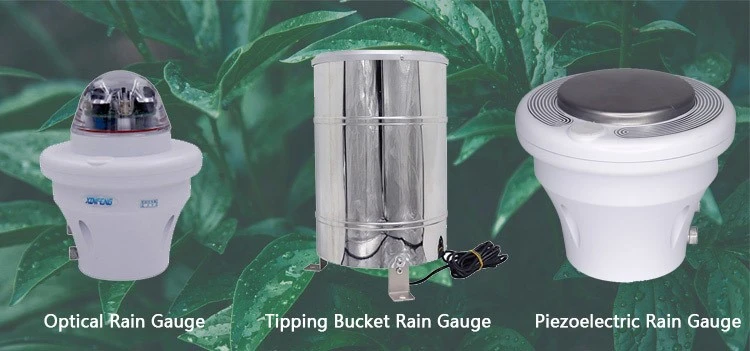
Common Types of Rain Gauges and Their Applications
There are many types of rain gauges on the market, each with its own advantages and limitations. Below are a few common types for your comparison.
Tipping bucket rain gauge
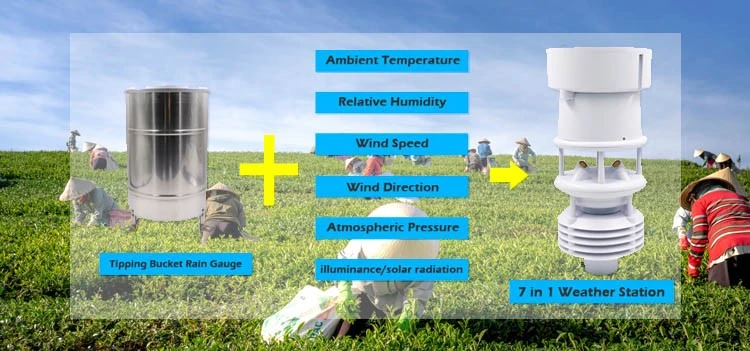
This is currently the most widely used type of rain gauge. The bucket flips over after being filled with water, recording precipitation.
Advantages: High degree of automation and long-term stable monitoring.
Disadvantages: Requires strict installation level and requires regular cleaning.
If you are an agricultural user or have weather monitoring needs, the tipping bucket type is a classic choice.
Piezoelectric rain gauge
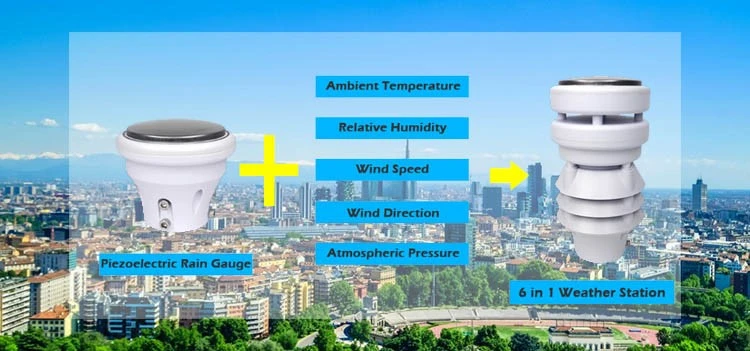
Measures precipitation by sensing the impact of raindrops with a piezoelectric element, without any moving parts.
Advantages: Maintenance-free, long life, and suitable for harsh environments.
Disadvantages: Relatively high price.
Suitable for professional applications such as scientific research and environmental monitoring.
Optical rain gauge
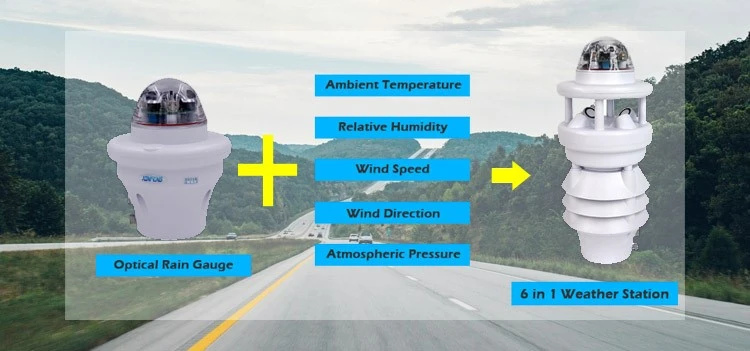
Uses optical sensors to identify the number and size of raindrops and is commonly used in high-end systems.
Advantages: No contact with water, no risk of clogging.
Disadvantages: High cost and strict requirements for the installation environment.
If you have a sufficient budget and need high accuracy and automation, consider an optical rain gauge.
Simple home rain gauge
The most common type is a transparent graduated cylinder with a scale.
Advantages: Low price and easy to use.
Disadvantages: Requires manual reading, not suitable for long-term data collection.
If you're just a gardening enthusiast or a regular home user, this model is perfectly adequate.
How to choose the best rain gauge based on your needs?
Before purchasing, ask yourself a few questions:
Why do I need a rain gauge?
For scientific research? Choose one with high accuracy.
For agriculture? Choose one with data upload capabilities.
For home use? A simple model will suffice.
What's your budget?
A few dozen yuan can meet basic needs.
High-end models costing over a thousand yuan are more suitable for scientific research or long-term projects.
What is the installation environment like?
Open spaces are suitable for tipping bucket or optical models.
For windy areas, consider piezoelectric models.
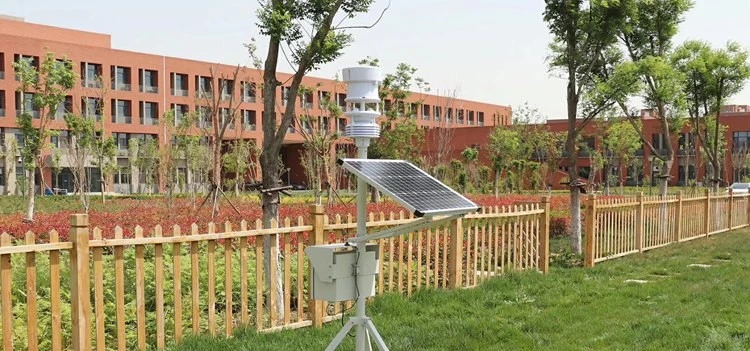
The best rain gauge = the one that suits you best.
When choosing the "best rain gauge," don't blindly pursue the most expensive or feature-rich model. The true "best" is the one that best meets your needs. For home use, choose a simple model; for agricultural use, choose an automated model; for scientific research, choose a high-precision model. Only by considering your budget, environment and purpose of use can you buy the "best rain gauge" in the true sense.


