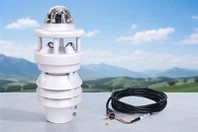
Within the technical framework of environmental monitoring, the term "environmental sensor" generally refers to the fundamental devices used to detect changes in the environment. Although the term sounds technical, the concept is simple: it involves converting real-world environmental changes into data that can be recorded and analyzed.
In practical applications, these changes might stem from rising or falling temperatures, shifts in wind speed, fluctuations in humidity, or even variations in light intensity or air composition. While humans cannot directly "read" these natural changes, environmental sensors continuously detect them and convert them into digital signals, making the environment measurable and analyzable.
What Exactly Is an Environmental Sensor?
By definition, an environmental sensor is not a single, specific device but a collective term describing any sensing apparatus capable of detecting physical changes in the environment. This means it could be a standalone temperature sensor or a component within a system measuring wind speed, rainfall, or light intensity.
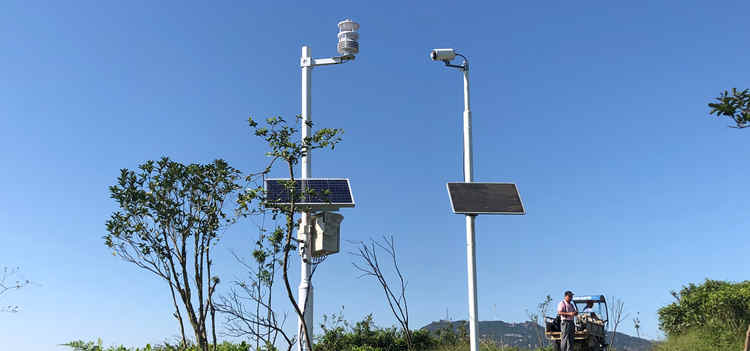
In practical engineering applications, environmental sensors rarely exist in isolation; instead, they appear as part of integrated environmental monitoring systems. For example, an agricultural monitoring station (such as the HCD6819 all-in-one agricultural sensor shown on the right) typically incorporates sensors for temperature, humidity, wind speed and direction, and soil conditions. Conversely, a photovoltaic project might focus on parameters that affect power generation efficiency, such as solar radiation, wind speed, and temperature.
Therefore, rather than viewing it merely as "a device," it is better understood as a "fundamental unit for environmental data acquisition."
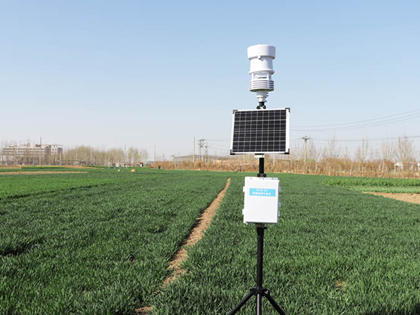
How Do Environmental Sensors Work?
The operation of an environmental sensor can be understood through a straightforward logic: it first detects external physical changes using internal sensitive materials or structures. These changes-often subtle-are sufficient to trigger alterations in electrical properties, such as resistance, voltage, or frequency.
Once captured, these raw signals undergo conversion and processing via internal circuitry, transforming them into standardized electrical or digital signals. The significance of this process lies in converting the "unstructured changes" of the natural world into "structured data" that can be processed computationally.
Finally, this data is transmitted-via wired or wireless means-to a monitoring system or cloud platform, enabling remote viewing, recording, and subsequent analysis. In modern environmental monitoring systems, this process typically operates continuously and automatically, allowing users to observe environmental trends in near real-time.
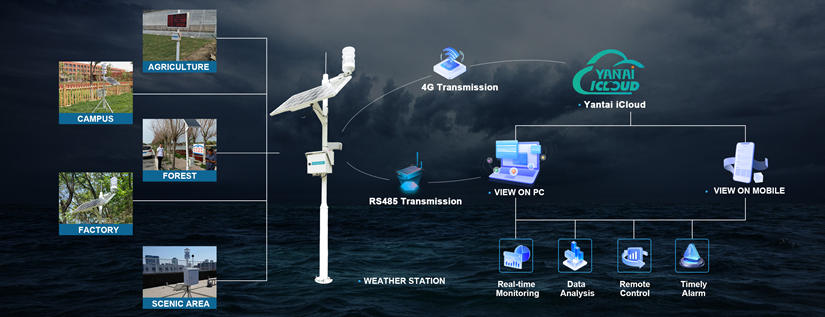
Why Environmental Sensors Are Becoming Increasingly Important
Traditional environmental monitoring methods relied heavily on manual recording or intermittent measurements; these approaches were not only inefficient but also struggled to capture dynamic environmental changes. In reality, environmental changes-such as sudden increases in wind speed, the rapid onset of rainfall, or short-term temperature fluctuations-often occur continuously.
The value of environmental sensors lies in their ability to bridge this "temporal gap," enabling the continuous recording of environmental changes and providing a comprehensive data foundation for subsequent analysis. Such continuous data is crucial for applications ranging from determining optimal irrigation timing in agriculture to assessing operational status in energy systems.
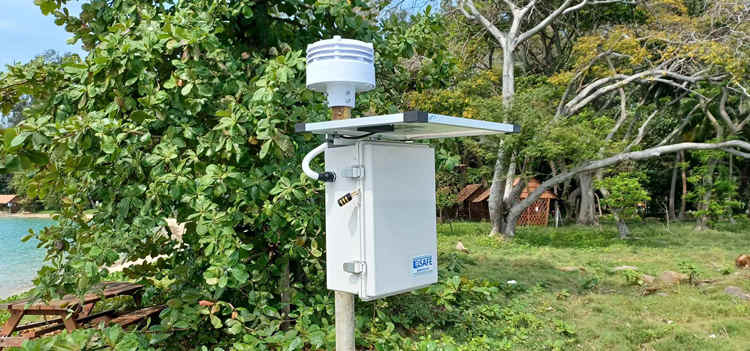
The Difference Between Environmental Sensors and Environmental Monitoring Systems
In practice, people often conflate environmental sensors with environmental monitoring systems, yet the two operate at different levels.
An environmental sensor functions primarily as a "sensing unit," responsible for capturing a specific physical quantity, such as temperature or wind speed. In contrast, an environmental monitoring system is an integrated solution comprising various types of sensors; it handles not only data acquisition but also data integration, transmission, and visualization.
In other words, sensors act as the "eyes and ears," while the monitoring system serves as the "brain."
Common Misconceptions
Several misconceptions frequently arise regarding this concept. For instance, many people equate environmental sensors with weather stations; however, a weather station is actually an integrated system composed of multiple environmental sensors rather than a single device.
Others assume that sensor data represents the absolute, true value of the environment. In reality, data is influenced by factors such as installation location, environmental interference, and equipment calibration status; consequently, engineering applications require strategic deployment and regular maintenance.
Additionally, some believe that all environmental sensors share a similar structure, whereas different types of sensors vary significantly in their operating principles and applications-for example, a wind speed sensor functions completely differently from a soil moisture sensor.
Where Are Environmental Sensors Typically Found?
Although environmental sensors themselves may be inconspicuous, they are widely deployed across a variety of real-world applications. In agriculture, they are used to monitor environmental changes in the field; in the photovoltaic industry, to assess solar resource conditions; in urban management, for air quality and micro-meteorological monitoring; and in transportation and hydrological systems, to provide environmental early-warning data.
It can be said that wherever environmental changes occur, environmental sensors are almost certainly present-though they often operate invisibly behind the scenes as part of the infrastructure.
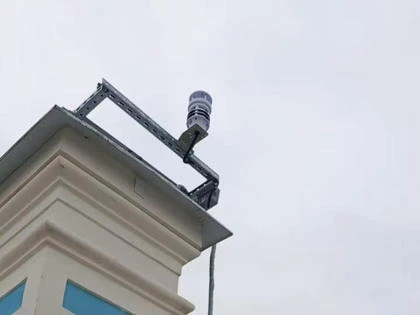
On the right is the XF600A environmental sensor we installed at the Catherine Palace in Russia.
Understanding the Essence of Environmental Sensors
To visualize this concept, think of environmental sensors as the "sensory organs" of the environment. Different types of sensors monitor specific environmental dimensions, while the entire system functions as a sensory network that continuously observes changes in nature.
Their value lies not in isolated data points, but in the ability to continuously record environmental changes-a capability that forms the foundation of modern environmental monitoring systems.
FAQ
What is an environmental sensor?
An environmental sensor is a general term for devices that detect environmental changes and convert them into data.
Are environmental sensors and weather stations the same thing?
No. A sensor is an individual sensing device, whereas a weather station is a system composed of multiple sensors.
Can environmental sensors be used independently?
Some can, but they generally require integration with data acquisition and transmission systems.
What do environmental sensors primarily measure?
They primarily measure environmental parameters such as temperature, humidity, wind speed, light levels, and air quality.
Why are environmental sensors important?
Because they convert continuous environmental changes into analyzable data, facilitating decision-making and system optimization.