

From monitoring soil moisture in agricultural fields and solar irradiance at photovoltaic plants to urban air quality monitoring networks, environmental sensors have become a vital component of modern environmental monitoring systems.
Environmental sensors continuously detect changes in the surrounding environment and convert these changes into analyzable data, providing a basis for decision-making.
What Are Environmental Sensors?
Environmental sensors are devices used to monitor changes in environmental parameters. Their primary function is to convert environmental information-such as temperature, humidity, wind speed, rainfall, light levels, soil conditions, and air quality-into data that can be recorded and transmitted.
Fundamentally, environmental sensors are not merely simple measuring tools; they serve as the foundation for environmental data acquisition systems. Accurate environmental data is essential to support applications ranging from weather forecasting and agricultural management to renewable energy generation.
As application demands evolve, standalone sensors are increasingly being replaced by integrated systems. Multi-parameter, all-in-one monitoring-such as that found in automatic weather stations and micro-meteorological monitoring systems-has become the prevailing trend.
Common Types of Environmental Sensors
Environmental monitoring typically relies on the collaboration of multiple sensors. Depending on the parameters being monitored, they can be categorized as follows:
Meteorological Monitoring Sensors
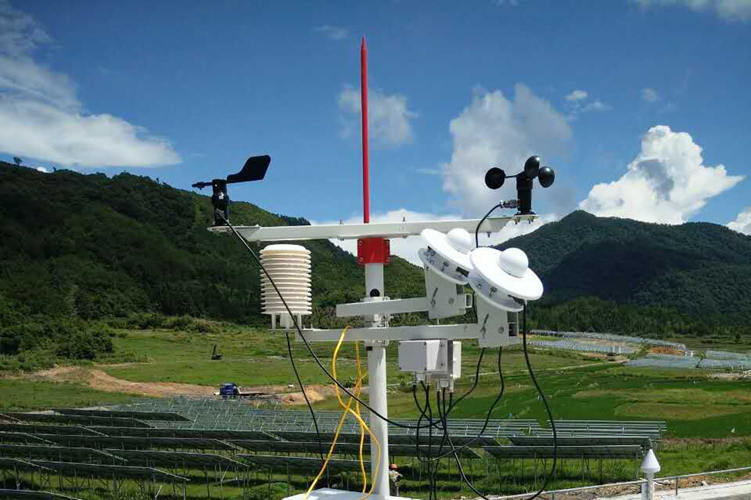
Meteorological monitoring is one of the most fundamental and widespread applications of environmental monitoring. Common parameters include air temperature, humidity, wind speed, wind direction, atmospheric pressure, and rainfall.
Traditional setups often require the installation of multiple independent sensors to collect this data, resulting in complex wiring and high maintenance costs. With advancements in sensor integration technology, an increasing number of users are opting for compact weather stations as comprehensive solutions.
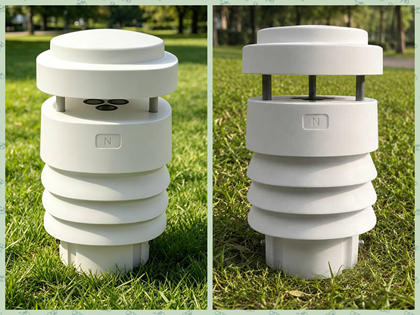
For instance, the XF805 compact weather station simultaneously monitors five parameters: temperature, humidity, wind speed, wind direction, and atmospheric pressure. Meanwhile, the XF808 compact weather station further integrates monitoring capabilities for rainfall, illuminance, and total solar radiation. Compared to traditional discrete installations, this highly integrated design effectively simplifies installation and enhances system stability.
These systems are currently widely used in agriculture, photovoltaic power plants, traffic monitoring, and ecological environmental monitoring.
Soil Monitoring Sensors
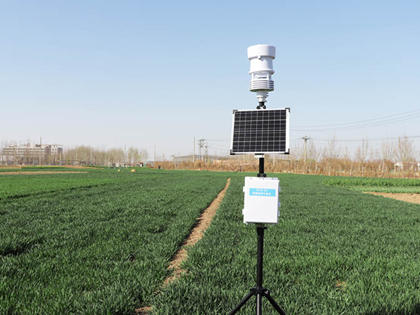
In agricultural production, the soil environment plays a crucial role in determining crop growth quality. Soil monitoring sensors are primarily used to monitor parameters such as soil moisture, soil temperature, electrical conductivity, and salinity levels.
By tracking soil conditions in real-time, growers can schedule irrigation more scientifically, avoiding water waste caused by over-irrigation while preventing crop growth issues resulting from prolonged water deficiency.
In smart agriculture, soil sensors are often paired with weather stations to enable simultaneous monitoring of above-ground and underground environments, thereby enhancing overall management efficiency.
Solar Radiation Sensors
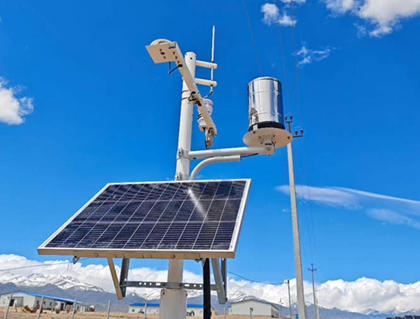
Solar radiation sensors measure solar energy intensity and are critical equipment for monitoring the operation of photovoltaic (PV) power plants.
Real-time radiation data allows for the assessment of PV generation efficiency and the analysis of discrepancies between actual and theoretical output, helping operations and maintenance (O&M) personnel quickly pinpoint issues.
Beyond the PV industry, these sensors are also widely used in agricultural light analysis and meteorological research.
On the right are photos from the site of our recent photovoltaic project in Kyrgyzstan.
Air Quality Sensors
Air quality sensors monitor fluctuations in the concentrations of PM2.5, PM10, CO₂, and other pollutants, serving as a vital component of urban environmental monitoring.
In smart city systems, air quality monitoring is often integrated with meteorological data analysis; factors such as wind speed, wind direction, and humidity are used to determine pollution dispersion trends, providing valuable insights for urban management.
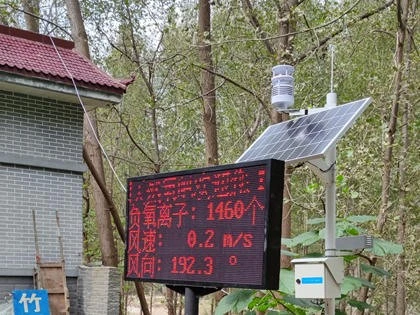
Key Application Scenarios for Environmental Sensors
The value of environmental sensors lies not only in data collection but also in helping users understand environmental changes and optimize management decisions.
Application of Environmental Sensors in Smart Agriculture
Agricultural production relies heavily on environmental data, including factors such as temperature, humidity, rainfall, and soil moisture.
By deploying environmental sensors, farmers can monitor field conditions in real-time and implement automated irrigation control, reducing reliance on manual experience while improving crop yield and quality.
Currently, the combination of compact weather stations and soil sensors has become a mainstream agricultural monitoring solution, enabling comprehensive environmental sensing.
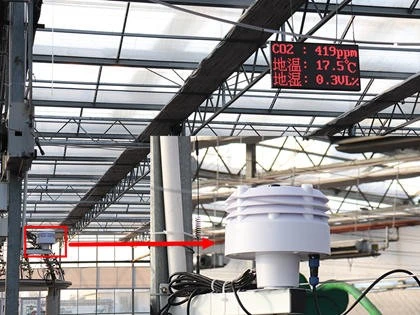
Application of Environmental Sensors in Photovoltaic Power Plants
Photovoltaic systems are highly sensitive to environmental changes; factors such as solar radiation, temperature, and wind speed all impact power generation efficiency.
Environmental monitoring systems allow operators to obtain real-time on-site data to assess power generation performance and equipment operating status.
For instance, integrated monitoring devices can provide both meteorological and radiation data simultaneously, reducing the number of installed units and lowering O&M costs.
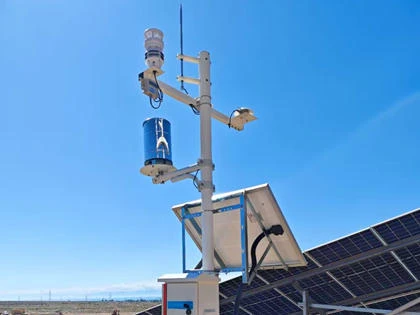
Applications of Environmental Sensors in Smart Cities
In the development of smart cities, environmental sensors are utilized for air quality monitoring, road micro-meteorological monitoring, flood warning systems, and urban environmental management.
Vast amounts of real-time data are transmitted via sensor networks to cloud platforms, supporting traffic management, urban planning, and emergency response efforts.
Furthermore, I believe that with the advancement of IoT and AI technologies, environmental sensors will play an increasingly vital role in smart city development.

How to Choose the Right Environmental Sensor?
With the wide variety of environmental sensors available on the market, selecting the right monitoring equipment involves more than just comparing specifications; it requires a comprehensive assessment of application scenarios, long-term stability, and system compatibility.
Measurement Accuracy and Long-term Stability
Environmental monitoring prioritizes long-term data reliability over single-point accuracy.
Sensors must remain stable during prolonged outdoor operation; therefore, calibration capabilities and drift control are particularly important.
Environmental Adaptability and System Compatibility
Equipment often operates for extended periods under conditions involving high and low temperatures, wind, rain, and UV exposure, making robust protection capabilities crucial.
Additionally, support for communication protocols such as RS485 Modbus facilitates easy integration into existing monitoring systems, enabling unified data management.
Why Choose YANTAI Environmental Sensors?
Since its inception, YANTAI has focused on R&D in environmental monitoring and sensor technology, dedicated to providing professional monitoring solutions for sectors such as agriculture, photovoltaics, transportation, hydrology, and smart cities.
The company has established a comprehensive R&D and testing framework, ensuring all products undergo rigorous validation before leaving the factory.
Leveraging CNAS-accredited laboratories and specialized wind tunnel facilities, the company conducts wind speed calibration, high/low-temperature testing, rainfall simulation, and environmental adaptability tests to ensure stable equipment operation in complex environments.
The current product portfolio includes compact weather stations, wind speed and direction sensors, rainfall sensors, solar radiation sensors, soil sensors, and air quality monitoring equipment, meeting environmental monitoring needs across diverse scenarios.
FAQ
What is an environmental sensor?
An environmental sensor is a device used to monitor environmental parameters such as temperature, humidity, wind speed, rainfall, soil conditions, and air quality.
In which fields are environmental sensors primarily used?
They are widely used in agriculture, photovoltaic power generation, ecological monitoring, transportation, hydrology, and smart city development. Do compact weather stations count as environmental sensors?
Yes, they do. Compact weather stations typically integrate multiple environmental sensors, enabling the simultaneous monitoring of various meteorological parameters.
Why is environmental monitoring becoming increasingly important?
Accurate environmental data helps users optimize decision-making, improve efficiency, mitigate risks, and achieve more scientifically grounded management.
How do you choose the right environmental sensor?
You should consider a range of factors, including the specific parameters to be monitored, the installation environment, communication methods, and the product's long-term stability.


