

Wind is one of the most critical environmental factors in outdoor operations. It impacts structural safety, agricultural spraying, rooftop equipment, maritime navigation, and meteorological monitoring. Consequently, many industries utilize wind speed and direction sensors to gather real-time wind data.
Wind speed and direction sensors enable us to understand both the velocity and the orientation of the wind. This article will explain the working principles of these sensors, common installation locations, potential issues, and how to select the appropriate model for your specific application.

What is a Wind Speed and Direction Sensor?
A wind speed and direction sensor is an outdoor measurement device designed to monitor airflow conditions. It typically integrates two distinct functions: wind speed measurement and wind direction detection.
This type of wind monitoring sensor is widely deployed in weather stations, smart agriculture, industrial automation, environmental projects, and building management systems. Many modern wind speed and direction sensors support digital communication protocols-such as RS485 Modbus-making them easy to interface with PLCs, data loggers, and remote control systems.
Compared to manual observation, automated wind sensors offer continuous data collection with greater efficiency and more reliable performance.
How Do Wind Speed and Direction Sensors Work?
The working principle of a wind speed and direction sensor involves converting wind movement into a readable electrical signal. The measurement of wind speed and wind direction typically employs different structural mechanisms.
How Does a Wind Speed Sensor Work?
A wind speed sensor typically consists of three rotating cups. When the wind blows, these cups begin to rotate; the stronger the wind force, the faster the cups spin.
Internal electronic components within the sensor detect this rotational speed. This motion is then converted into an output signal, which can be displayed in units such as meters per second (m/s), kilometers per hour (km/h), or other standard wind speed units.
This design is prevalent in industrial wind sensors due to its reliability, simplicity, and cost-effectiveness.
Common Advantages of Cup-Type Wind Speed Sensors
Rapid response to changes in wind conditions
Stable operation over long periods
Ease of maintenance
Suitable for outdoor deployment

How Does a Wind Direction Sensor Work?
A wind direction sensor typically utilizes a wind vane structure. When the wind direction shifts, the vane automatically rotates until it aligns with the direction of the airflow.
Internal sensing elements read this angle of rotation and output a directional value ranging from 0° to 360°. For example:
0° = North
90° = East
180° = South
270° = West
This allows users to monitor wind direction in real time.
The Importance of Wind Direction Data
Wind direction data is crucial for the following applications:
Crane operation safety
Greenhouse ventilation control
Air quality monitoring projects
How Integrated Wind Direction Sensors Work
Some users prefer to select wind sensors that integrate both wind speed and wind direction measurement capabilities.
This integrated design reduces cabling requirements, saves installation space, and simplifies maintenance. It is an ideal choice for small-scale weather stations and smart monitoring systems.
Integrated wind speed and direction sensors typically utilize an RS485 output interface, transmitting both wind speed and direction data simultaneously via a single cable.

What Are the Application Fields for Wind Speed and Direction Sensors?
Wind speed sensors are widely used across various industries, as wind conditions directly impact safety and efficiency.
Wind Speed Sensors in Construction and Crane Operations
Strong winds pose safety risks to tower cranes, mobile cranes, and lifting systems. Installing industrial wind speed sensors helps operators make safer operational decisions.
Wind Speed Sensors in Agriculture
Farmers use wind speed monitoring sensors for irrigation planning, greenhouse ventilation, and pesticide spraying. Excessive wind speeds can compromise the precision of spraying operations.
Wind Speed Sensors in Rooftop Construction
Many commercial buildings install wind speed sensors on their rooftops for weather observation, HVAC system management, and storm warning purposes.
Wind Speed Sensors in Marine and Port Operations
Ports, vessels, and dockside equipment utilize wind speed sensors to monitor coastal wind conditions, thereby enhancing operational safety.
Wind Speed Sensors in Environmental Projects
Weather stations and smart city systems typically integrate wind speed and direction sensors with sensors for temperature, humidity, rainfall, and atmospheric pressure.
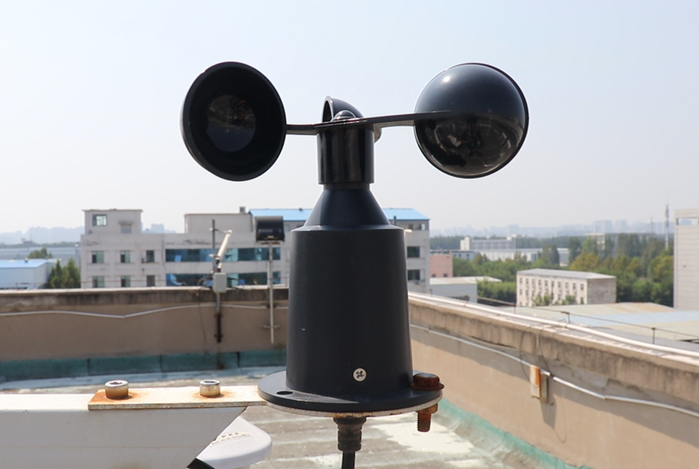
Where Should Wind Speed Sensors Be Installed?
Selecting the correct installation location is critical for obtaining accurate wind speed measurements.
Best Installation Practices
Install the wind speed sensor in an open area to ensure that airflow is not obstructed by walls, trees, or nearby buildings; for instance, if installing it next to a house, maintain a distance of at least 1.5 meters from the structure.
Recommended Installation Height
A higher installation position allows for better wind exposure to the wind speed sensor. Therefore, you will find that rooftops, poles, and towers are common locations for installation.
Avoid Vibration
If the mounting bracket shakes continuously, wind speed readings may become unstable; therefore, please ensure you use a sturdy mounting structure.
Maintain Vertical Alignment
The sensor must be mounted vertically; if installed at an angle, the data obtained will be inaccurate.
Common Issues with Wind Speed and Direction Sensors
Even highly reliable outdoor wind sensors may require inspection after prolonged use.
Slow Wind Cup Rotation
This may be caused by dust accumulation or debris becoming lodged within the rotating components. In such cases, the debris should be cleared or the affected components replaced promptly.
Inaccurate Wind Direction Readings
A loose mount, damage to the wind vane components, or internal mechanical wear can all lead to deviations in wind direction data.
No Output from Wind Sensor
Please check the power supply, communication wiring, RS485 polarity, and device address settings.
Excessive Fluctuation in Wind Data
Poor grounding, electromagnetic interference, or an unstable mounting bracket can all adversely affect the readings.

How to Choose the Right Wind Sensor
Selecting the appropriate wind speed and direction sensor depends primarily on the specific application environment of the project and the accompanying control system.
Select the Appropriate Output Type
Wind sensors featuring an RS485 interface are frequently utilized in industrial automation and remote monitoring applications due to their broad compatibility.
Consider the Protection Rating
For outdoor environments, it is recommended to select products with an Ingress Protection (IP) rating of IP65 or higher.
Evaluate Material Properties
In harsh climatic conditions, opting for sensors made of aluminum alloy or corrosion-resistant materials provides greater reliability.
Choose Between Split-Type and Integrated Sensors
Split-type sensors offer greater flexibility when building customized systems, whereas integrated wind sensors feature a compact design that simplifies the installation process. You may choose the option that best suits your specific requirements.

Recommended Wind Sensor Solutions
Different project requirements call for different wind monitoring equipment solutions.
Split-Type Wind Speed Sensor
Suitable for applications where only wind speed data is required.
Split-Type Wind Direction Sensor
Suitable for systems that prioritize the monitoring and control of airflow direction.
Integrated Wind Speed and Direction Sensor
A practical solution for applications in meteorology, agricultural production, rooftop monitoring, and environmental surveillance. Whether your application scenario involves agriculture, construction, smart cities, marine monitoring, or weather forecasting, selecting a wind sensor with reliable performance can effectively enhance your system's safety, operational efficiency, and data accuracy.


