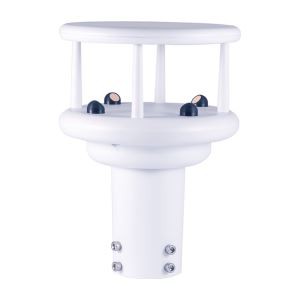
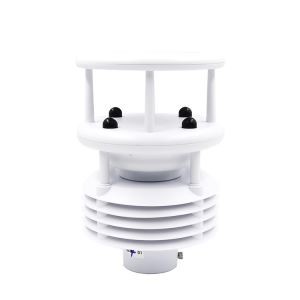
The RY-YLX tipping-bucket rain sensor is a precision instrument designed to measure precipitation based on the tipping-bucket metering principle. It converts rainfall into measurable pulse or digital signals.
By recording the number of pulses (where one pulse corresponds to 0.2 mm of precipitation) or utilizing RS485 digital communication, the sensor enables the automatic collection of data regarding precipitation amount, intensity, and duration.
Widely used in small weather stations, hydrological stations, agricultural and forestry research, urban flood control, and field monitoring networks, this product is a proven and reliable solution for meteorological and hydrological applications.

Product Features of the Tipping-Bucket Rain Sensor
High-precision tipping mechanism: The tipping bucket utilizes a superior support system featuring low friction and sensitive tipping action with excellent repeatability, ensuring that every tip consistently corresponds to 0.2 mm of precipitation.
All-stainless-steel main structure: The intake funnel is formed from stainless steel via a single-step stamping process, resulting in a smooth finish and minimal error caused by water retention. The housing and key structural components are also made of stainless steel, offering a premium appearance and corrosion resistance suitable for long-term outdoor use.
Anti-clogging funnel design: A unique funnel structure effectively prevents debris-such as fallen leaves and sediment-from blocking the intake, thereby reducing maintenance frequency.
Easy installation and leveling: The base features a built-in leveling bubble, allowing for quick on-site leveling to ensure measurement accuracy.

Wide operating range: Operates between 0°C and +60°C with an IP65 protection rating, making it suitable for harsh weather conditions including rain, snow, wind, and sand.
Dual signal output options:
Standard RY-YLX model: Reed switch pulse output (1 pulse = 0.2 mm precipitation); offers long transmission distances and strong interference resistance.
RY-YLX/485 model: RS485 interface supporting the standard Modbus-RTU protocol, facilitating easy integration with PLCs, data loggers, and IoT cloud platforms.
Technical Specifications of the Tipping-Bucket Rain Sensor
Rian collector diameter:φ200mm
Measuring range:≤4mm/min
Resolution 0.2mm(customizable 0.1mm)
Outpur:
|
RY-YL |
RY-YL/S |
RY-YL/485 |
|
Dry reed pipe switch on and off, pulse (1 pulse = 0.2mm rainfall) |
4-20mA |
RS485modbus |
Weigth:4KG
Material:Stainless steel
Respond time:1S
Work environment:Temperature 0~+60℃
Standard line length:1.5m
Farthest lead wire:Current200m, RS485 100 m,voltage 50m
Ingress Protection:IP65
Working Principle of the Tipping-Bucket Rain Sensor
Rainwater is collected through the intake funnel and flows into the metering tipping bucket. When the water in the tipping bucket reaches a predetermined volume (corresponding to 0.2 mm of precipitation), the bucket's center of gravity shifts, causing it to tip rapidly.
During this tipping action, a magnet attached to the bucket sweeps past a reed switch, momentarily closing the circuit and outputting a pulse signal. Each pulse output by the sensor represents 0.2 mm of precipitation.
By accumulating the number of pulses, the total rainfall over a specific period can be accurately determined. This mechanism features a simple structure and high measurement accuracy, making it a globally recognized method for tipping-bucket rainfall measurement.

Application Scenarios for Tipping-Bucket Rain Gauges
Meteorological Observation: Automatic weather stations, regional weather monitoring networks, and campus weather stations.
Hydrological Monitoring: Precipitation monitoring for river, lake, and reservoir watersheds; flash flood warning systems.
Agriculture and Forestry: Irrigation decision-making, soil moisture monitoring integration, and forestry ecosystem precipitation recording.
Urban Disaster Prevention: Urban waterlogging monitoring, "Sponge City" project effectiveness assessment, and traffic weather services.
Scientific Research and Education: Atmospheric science experiments in universities and precipitation research in ecological reserves.
FAQ
How do I install the tipping-bucket rain sensor?
Level and unobstructed. The base includes a bubble level; simply center the bubble during installation to avoid compromising accuracy. The intake should be positioned 70 cm above the ground with no surrounding obstructions, and the base must be securely fixed to prevent wobbling.
Is the tipping-bucket rain sensor accurate?
Yes, it is accurate, with a resolution of 0.2 mm, meeting meteorological observation standards. Accuracy depends on proper leveling and keeping the interior clean; with regular maintenance, it is the most reliable precipitation measurement solution in the fields of meteorology and hydrology.
What are the differences between tipping-bucket rain gauges and optical, radar, or piezoelectric rain gauges?
Tipping-bucket gauges rely on the physical volume of the bucket for measurement, offering high precision and stability; they are the preferred choice for standard meteorological stations. Optical and radar gauges utilize light attenuation or electromagnetic wave inversion; while they respond quickly, they are susceptible to environmental interference. Piezoelectric gauges convert impact force into measurements; they are low-cost but prone to higher error margins, making them more suitable for early warning systems than for standard observation.
What are the output options for this tipping-bucket rain gauge?
Two options are available: pulse output (1 pulse = 0.2 mm of precipitation), suitable for connection to traditional data loggers; and RS485 output (Modbus-RTU), suitable for integration with cloud platforms or networked communication systems. You can choose the option that matches your data acquisition equipment's interface.
Can it operate normally during heavy rainfall?
Yes; it has a measurement range of ≤4 mm/min and can withstand instantaneous high-intensity rainfall. After a heavy downpour, it is recommended to check the intake and funnel for any debris blockages to ensure the accuracy of subsequent measurements.
Hot Tags: rain gauge sensor, China, manufacturers, suppliers, factory, price, cost, best, for sale, rain sensor, temperature and humidity sensor meter, Soil PH Meter RS485 Waterproof, Sound Level Sensor Noise Level Measurement Meter, co2 air quality monitor, Integrating sensors