

In the past two years, if you've followed the environmental monitoring, smart agriculture, or photovoltaic industries, you've noticed a significant change: more and more projects are abandoning traditional "large weather stations" and opting for mini and compact weather stations instead.
People's impression of meteorological equipment is generally limited to "tall poles," "a bunch of sensors," and "complex wiring," with the common belief that larger equipment equates to greater professionalism and more parameters equate to greater reliability.
However, those actually working on projects in the last two years have noticed a surge in compact weather stations on the market. These are not only small, but their measurement range and accuracy are in no way inferior to, and often even better than, traditional weather stations.
This is precisely why compact weather stations have become increasingly popular in recent years.
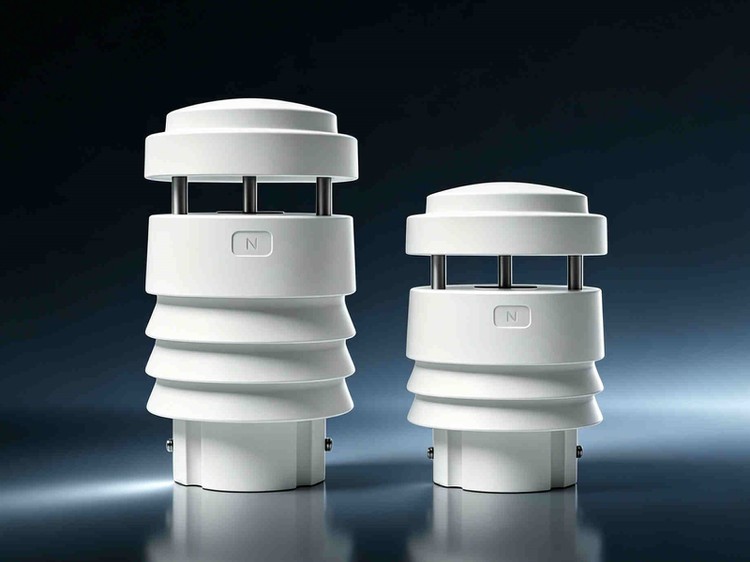
Why Are More and More Projects Choosing Compact Weather Stations?
Traditional weather stations aren't inherently bad; rather, the needs of many industries are changing.
The Shortcomings of Traditional Weather Stations
Traditional weather stations have their advantages, such as relatively lower prices and more accurate parameters, but they also have inherent and difficult-to-reconcile shortcomings.
Maintenance Costs Are High
Previously, meteorological monitoring primarily served specialized meteorological departments, with fixed equipment, ample budgets, and dedicated on-site maintenance personnel. However, increasingly more environmental monitoring projects are moving towards "distributed" and "unmanned" operations. Equipment may be installed in farmland, among solar panels, on school rooftops, in scenic areas, or along roadsides. Frequent maintenance quickly increases overall costs.
Therefore, many users now consider more than just specifications when choosing mini weather stations; they are focusing on whether the station can operate long-term with minimal effort and hassle.
Mechanical Structure Leads to Data Instability
Many traditional devices use mechanical structures, such as mechanical wind cups and wind vanes. While initial installation may not cause problems, prolonged operation can lead to bearing wear, jamming, dust accumulation, and even icing, all of which can affect data stability.
These issues are particularly pronounced in high-humidity, coastal, or environments with large diurnal temperature variations.
This is why more and more compact weather stations are adopting ultrasonic technology. Ultrasonic weather stations have no rotating mechanical structures, resulting in significantly lower maintenance requirements over long-term operation, making them more suitable for unmanned scenarios.

Advantages of Mini Weather Stations
Many project sites lack sufficient installation space. Examples include areas between photovoltaic panels, small agricultural monitoring points, and urban environmental monitoring nodes. In these scenarios, smaller equipment size facilitates installation.
One of the biggest advantages of mini weather stations is their compact structure while maintaining monitoring capabilities. For many projects, this not only means simpler installation but also easier maintenance.
Easier maintenance translates to reduced labor costs, a win-win situation for any business or project.

Different Industries Have Different Needs for Mini Weather Stations
Although all are meteorological monitoring devices, different scenarios have significantly different priorities.
Agricultural Monitoring Focuses on Long-Term Stability
Agricultural equipment is typically exposed to high temperatures, direct sunlight, and humidity for extended periods. Therefore, many projects prioritize equipment lifespan and ease of maintenance.
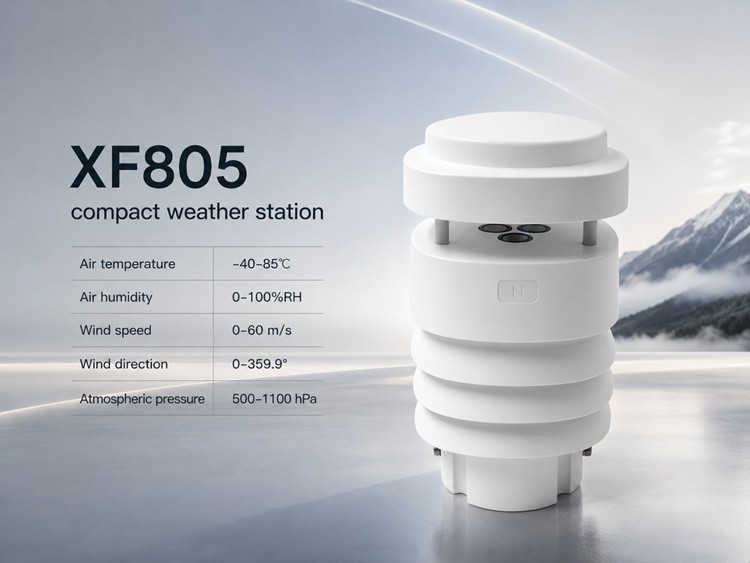
The XF805 is a typical multi-parameter compact weather station that can simultaneously monitor parameters such as temperature, humidity, wind speed, wind direction, and air pressure, making it suitable for agricultural and environmental monitoring scenarios.
Compared to traditional split-type devices, these mini weather stations are simpler to install and more suitable for long-term deployment.
Photovoltaic projects focus more on irradiance and environmental data.
The demand for micro-meteorological monitoring in the new energy industry has grown rapidly in recent years because environmental data directly affects power generation analysis and operation and maintenance decisions.
In addition to conventional meteorological parameters, the XF808 also supports solar radiation-related monitoring, making it more suitable for photovoltaic power plant environmental monitoring scenarios.

Urban environmental monitoring prioritizes device size.
Many urban projects are now implementing grid-based environmental monitoring, and devices typically need to be installed on streetlights, road edges, or rooftops.
Therefore, miniaturization becomes a significant advantage.
The XF802 is an ultrasonic anemometer with a more compact size, making it more suitable for smaller scenarios requiring wind speed and direction monitoring.

Lightweight, multi-parameter monitoring is becoming increasingly common.
In the past, achieving multi-parameter monitoring usually required installing many separate devices.
However, more and more projects now want "one device to complete more monitoring tasks."
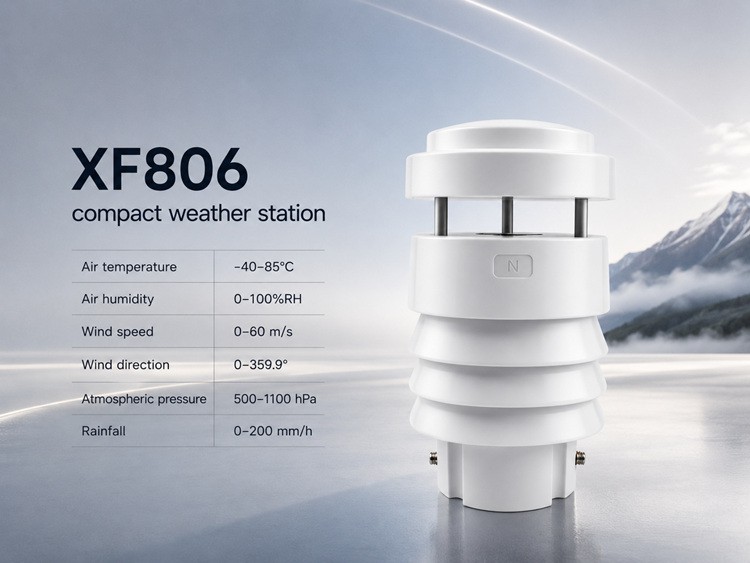
The XF806, a highly integrated and compact weather station, is becoming increasingly common in scenic areas, construction sites, and small unmanned monitoring stations.
Why is the search volume for "mini weather station" increasing?
Because more and more industries are starting to need environmental data, but not necessarily traditional large weather stations.
Many projects are now focusing on ease of installation, simplicity of maintenance, and long-term stable operation.
Therefore, search volume for keywords such as "mini weather station," "compact weather station," and "ultrasonic weather station" has been steadily increasing in recent years.
For many industries, weather monitoring is gradually transforming from "specialized equipment" into a fundamental environmental data capability.
In fact, it's clear that "mini weather stations are the future trend," as more and more projects are realizing that what truly matters is not just the parameters, but whether the equipment can operate stably for three, five, or even longer at a low cost.

FAQ
1. What are the differences between a mini weather station and a traditional weather station?
The main difference lies in installation and maintenance. Traditional weather stations are more complex and have more equipment; mini weather stations are more integrated, simpler to install, and suitable for project deployment.
2. Is the installation of a small weather station complicated? Does it require professional personnel?
Generally not. Most compact weather stations have standard installation; simply fix the pole, connect the wires, or power it on.
3. Is a mini weather station stable for long-term outdoor use?
Yes. Modern mainstream ultrasonic structures have no mechanical rotating parts, resulting in better long-term operational stability and lower maintenance frequency.
4. Can data from an all-in-one weather station be viewed remotely?
Yes. It typically supports 4G, RS485, or Ethernet access and can be uploaded to a platform or customer system.


