

Weather is more complex than just "sunny," "cloudy," or "rainy." To accurately understand weather conditions, it is necessary to measure various data points such as temperature, humidity, wind speed, wind direction, atmospheric pressure, rainfall, and solar radiation.
Consequently, there is a wide variety of weather instruments. Different meteorological parameters are monitored by specific instruments, though some users opt for integrated weather monitoring systems.
This article introduces the different types of weather monitoring equipment available.
Weather Instruments for Temperature and Humidity
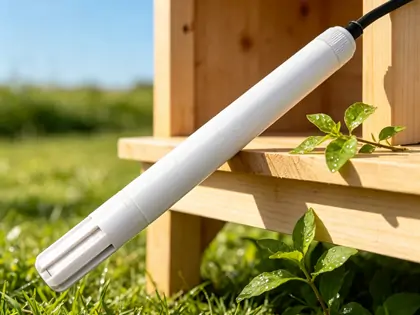
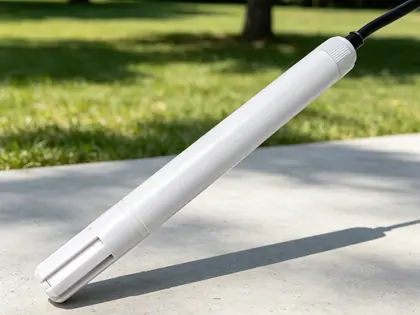
Temperature and humidity are among the most fundamental weather data points.
Temperature sensors measure air temperature, while humidity sensors measure relative humidity. In practical weather monitoring, these two parameters are often recorded simultaneously; therefore, common temperature and humidity sensors are designed to measure both.
Such devices are widely used in outdoor environmental monitoring, agricultural meteorology, warehouse climate control, and weather stations.
Weather Instruments for Wind Measurement
Wind speed and wind direction are critical parameters in weather observation and represent common types of weather instruments.
Traditional anemometers are typically used to measure wind speed, while wind vanes determine wind direction. Modern ultrasonic wind sensors combine both functions into a single unit.
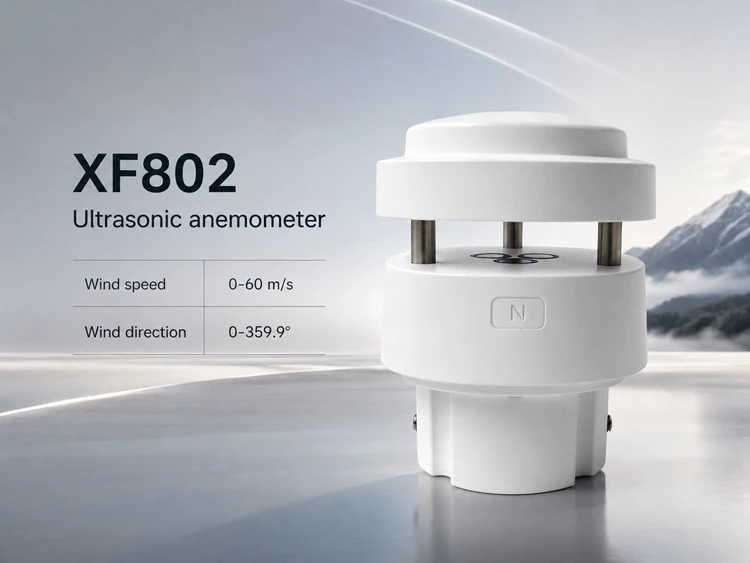
For example, the YANTAI XF802 measures both wind speed and direction without relying on moving mechanical parts, making it ideal for long-term, continuous outdoor wind monitoring.
For projects requiring additional data-such as temperature, humidity, or atmospheric pressure-multi-parameter integrated devices can be used to combine wind measurements with other weather metrics.

Weather Instruments for Atmospheric Pressure
Instruments for measuring atmospheric pressure constitute another common category of weather equipment.
Atmospheric pressure fluctuates based on factors such as weather systems and elevation; therefore, pressure data is often analyzed alongside information on temperature, humidity, and wind conditions.
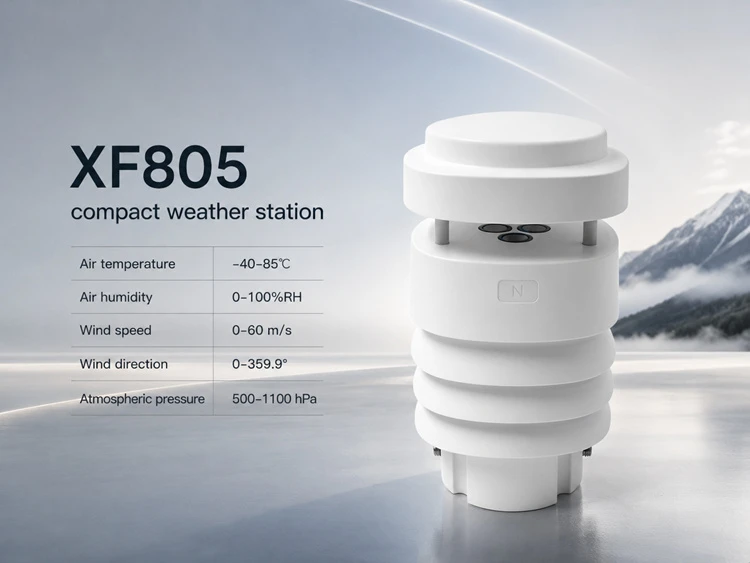
In automated weather monitoring systems, pressure sensors can operate as standalone units or be integrated into multi-parameter monitoring devices. For instance, the XF805 integrates atmospheric pressure measurement with temperature, humidity, wind speed, and wind direction sensing.
Weather Instruments for Rainfall
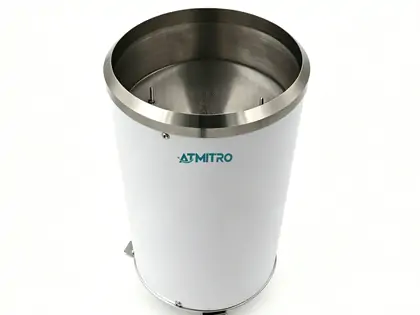
Rainfall requires specialized measurement equipment.
Common methods for measuring rainfall include tipping-bucket gauges and various electronic measurement technologies. Different devices vary in terms of measurement principles, accuracy, maintenance requirements, and suitable operating environments.
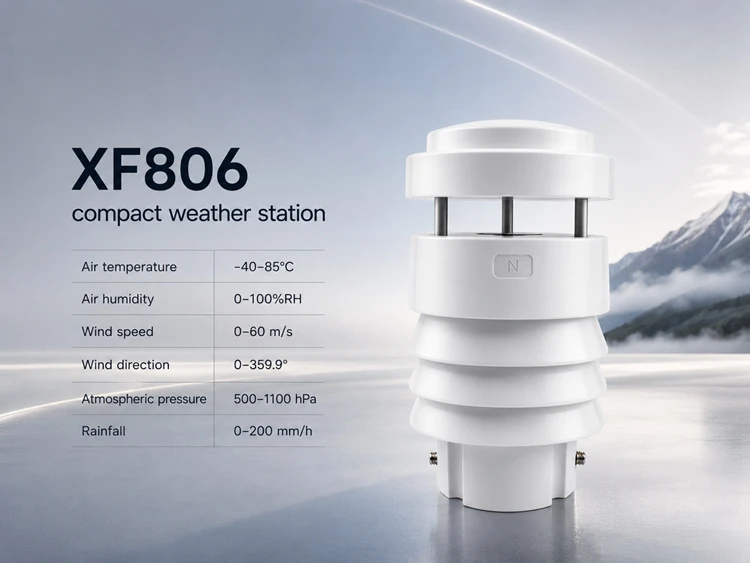
For projects requiring the simultaneous monitoring of multiple weather parameters, one can choose integrated weather instruments that include rainfall measurement capabilities. For instance, the XF806 adds rainfall measurement to basic weather parameters, thereby reducing the cabling and maintenance work associated with installing multiple standalone devices.
Types of Weather Instruments for Solar Radiation and Light
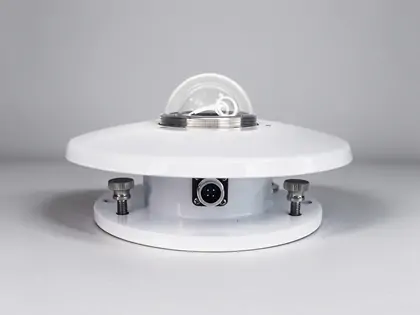
Data on solar radiation and light levels are of practical importance for projects such as solar power generation, agricultural meteorology, and environmental monitoring.
Illuminance measurement devices are used to measure ambient light levels, whereas solar radiation measurement devices are used to determine the solar radiation energy received per unit area.
Although both types of data relate to sunlight, their applications and units of measurement differ; therefore, one set of results cannot simply be substituted for the other.
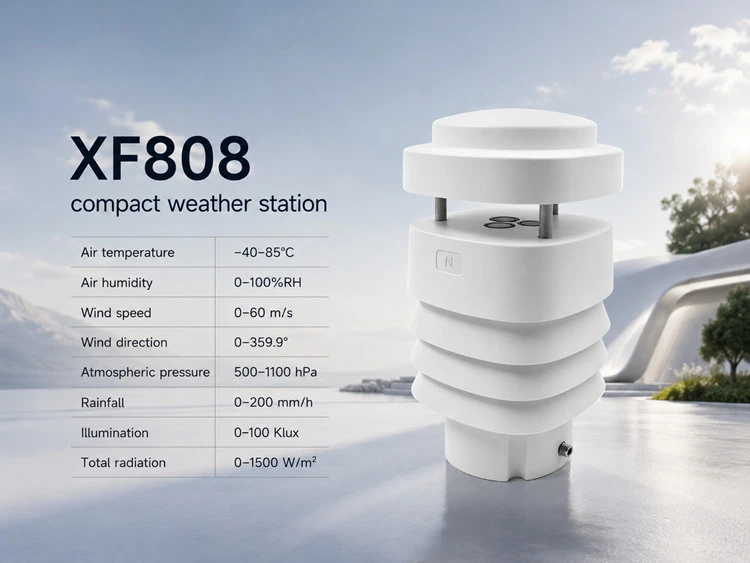
For projects requiring the simultaneous acquisition of various weather and solar radiation data, the XF808 integrates temperature, humidity, wind speed, wind direction, air pressure, rainfall, illuminance, and total solar radiation into a single device.
Integrated Weather Instruments
Not all weather monitoring projects require the installation of separate instruments for every parameter.
With the advancement of automated monitoring, multi-parameter integrated weather instruments have become a common equipment option. They can capture multiple weather data points from a single installation location and connect to data loggers or monitoring platforms via interfaces such as RS485/Modbus RTU.
Examples:
| Type Key | Measurement Parameters | Example |
| Wind Speed & Direction Sensor | Wind speed, wind direction | XF802 |
| Multi-parameter Weather Instrument | Temperature, humidity, wind speed, wind direction, air pressure | XF805 |
| Multi-parameter + Rainfall | Temperature, humidity, wind speed, wind direction, air pressure, rainfall | XF806 |
| Multi-parameter + Solar Radiation | Temperature, humidity, wind speed, wind direction, air pressure, rainfall, illuminance, solar radiation | XF808 |
Therefore, the choice of weather instrument depends primarily on the specific weather parameters to be monitored. Simple projects may utilize single-parameter instruments, whereas automated weather stations requiring continuous data collection for multiple parameters can employ integrated devices.
FAQ
What are the main types of weather instruments?
Common types include devices for measuring temperature and humidity, anemometers (wind speed) and wind vanes (wind direction), barometric pressure sensors, rainfall gauges, and solar radiation sensors.
What instruments are used to measure wind?
Common wind-measuring instruments include anemometers, wind vanes, and ultrasonic wind sensors that measure both speed and direction simultaneously.
Can different weather instruments be combined into one device?
Yes. Multi-parameter integrated weather instruments can combine various measurement functions-such as temperature, humidity, wind speed, wind direction, barometric pressure, and rainfall-into a single device.
Recommended Reading
Weather Measuring Instruments for Different Applications
Weather for Instruments: From Individual Measurements to Integrated Monitoring


